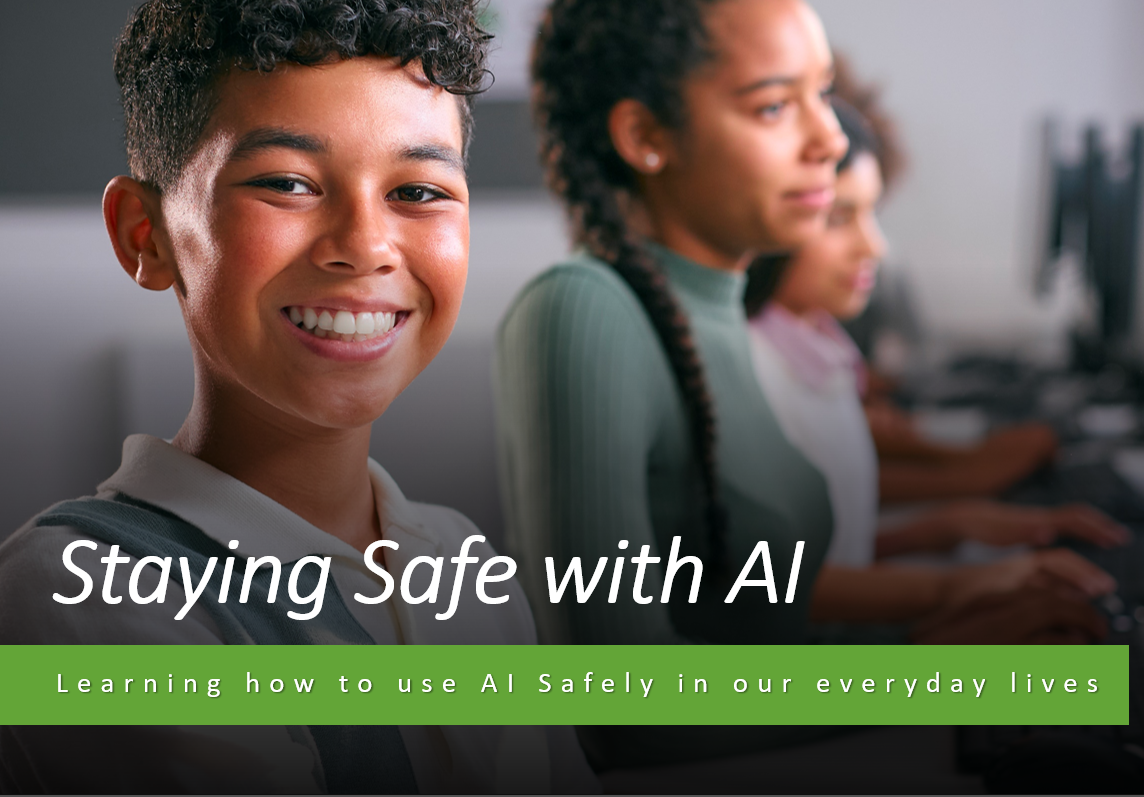
AI Safety for Students: A 45-Minute Teacher PD You Can Run This Week
AI Safety teacher PD for K–12 schools: a practical 30–45 minute staff training that aligns shared language and classroom routines for student privacy, personal identifying information, app permissions, digital footprints, deepfakes, misinformation, and verification. Includes a ready-made Gamma presentation and printable notetaker to implement immediately.
Why I’m Doubling Down on PLCs and What’s Coming Next
Discover how Professional Learning Communities (PLCs) can drive effective AI implementation in schools. Learn why both edtech companies and school systems are underprepared for the mindset shift AI requires—and how structured PLCs can bridge the gap through collaboration, reflection, and sustained support.

Change Management Is Not a Buzzword. It’s What PLCs Are Built For.
Too often, schools invest in new curriculum or edtech tools without a clear plan for implementation. This article explores how PLCs can be used as a change management strategy—supporting real-time collaboration, troubleshooting, and teacher success. Perfect for school and district leaders ready to rethink how PLCs drive change.

What Real PLC Facilitator Development Looks Like: Building Confidence, Competence, and Capacity
Most school leaders I work with aren’t struggling to implement PLCs, they’re struggling to sustain them. And more often than not, the breakdown happens not at the team level, but at the leadership layer within the team: the facilitator.
These facilitators are often thoughtful, committed educators. They’re trusted by their peers. They're experienced with students. So we assign them to lead PLCs… and then we walk away. No training. No coaching. No plan.
And then we wonder why the work stalls.
We don’t have a PLC problem. We have a support problem.
Facilitators are asked to lead adult learning, manage dynamics, hold focus, and anchor collaboration in student outcomes. It’s high-leverage work, but it rarely comes with the kind of support it deserves. Selecting the right person is just the beginning. The real work starts after that.

Skill, Will, or System? A Better Question for School Improvement
When Initiatives Become Moments Instead of Plans
At the same time, I watched initiatives stack up.
One-size-fits-all professional development sessions delivered early in the year. Big ideas introduced with urgency. Expectations set with confidence. And then, almost immediately, leaders looking for evidence that the work was already showing up in classrooms the following week.
What was missing was follow-up.
There was no protected time to plan how the strategies would actually be used. No structured opportunity to revisit the learning. No ongoing training to help teachers translate ideas into practice. The expectation was immediate implementation, but the support stopped at the end of the PD session.
Nothing had been removed to make room for this new focus. No roles had been adjusted. No time had been protected.
This wasn’t an isolated moment. It was a pattern.

The Cost of Control (and the Courage of Curiosity)
I was asked to run the PLC rollout because I had done it before.
Or, more honestly, because I had tried to do it before—and it hadn’t gone well.
I carried that failure with me. So when I was asked to lead again, I didn’t walk in optimistic. I walked in wary. I was fairly certain this wouldn’t be a “true” PLC either. But when your supervisor gives you a directive, you make it work. And this time, I was determined it wouldn’t fail.
I did everything I could to make it successful.
The district had issued a directive to launch PLCs. Around the same time, the school decided to do a staff book study using The Reading Strategies Book by Jennifer Serravallo. On paper, it made perfect sense to combine the two. Each week, teams would meet, align to the pacing calendar, and plan using strategies connected to that week’s reading standard.
It felt aligned.
It looked efficient.
And I ran all of it.
I built the agendas. I matched the strategies. I facilitated every meeting, guided every discussion, redirected when needed, and captured all the notes.
I thought I was helping.

How Leadership Grows Effective PLC Facilitators
In almost every school, PLCs are running. Facilitators are leading. Agendas are being followed. Data is being discussed.
From the outside, it looks like things are moving.
But if you sit in on those meetings and really pay attention to what is going on, you’ll often find something missing. The conversation might feel surface-level. The data might not lead to instructional shifts. One voice dominates, while others disengage. There’s a rhythm, but not much resonance.
And often, the facilitator is left wondering: What am I doing wrong?
Here’s what I’ve seen across schools, again and again: we expect facilitators to lead at a high level, but we don’t build the support system around them to make that possible.
We assume that because someone is respected, organized, or willing that they’ll be fine. But facilitation isn’t about being liked or staying on schedule. It’s about navigating adult learning in real time. It’s about guiding inquiry, managing dynamics, making space for discomfort, and keeping the work grounded in what’s best for kids.
That’s a tall order. And it’s not something anyone can do alone.

From Scripted to Supported: Coaching Change When the Curriculum and the Safety Net Disappears
The meeting hadn’t even started yet, and I could already tell how it was going to go.
One teacher sat down with her arms crossed. Another stared at her laptop, disengaged. And one—an experienced reading strategist who had recently come out of retirement—walked in visibly frustrated, already mid-complaint about student behavior and reading levels.
I glanced at my agenda and knew it wouldn’t survive the hour.
At the time, I thought the problem was curriculum. What I eventually learned was that it was grief—and that the most effective coaching move I made that year didn’t involve lesson plans, data, or differentiation strategies at all.
It involved five minutes of listening.

The People Who Hold It Together: Developing and Supporting Your PLC Facilitators
Professional Learning Communities (PLCs) are now a standard feature in most schools. Ask any teacher if they participate in a PLC and they’ll likely say yes. Ask a leader if staff have been trained in the PLC process, and the answer is often yes again.
But despite how common they are, many PLCs still struggle to move the needle on student learning. The challenge is rarely one of intention, it’s usually a breakdown in the system that supports the work. And at the center of that system are the people we often overlook: PLC facilitators.
These are the educators tasked with guiding adult learning, managing personalities, holding space for collaborative inquiry, and keeping the work anchored in instruction. Yet far too often, we assign someone to be a facilitator and then step back without training them, without coaching them, and without building the structures they need to thrive.

The Leadership PLC: Why Your School Needs a PLC About PLCs
Leadership teams are often expected to monitor PLCs. But monitoring isn’t enough.
If you’re not meeting regularly as a team to look at adult collaboration, analyze breakdowns, reflect on leadership moves, and plan targeted support—you’re not leading your PLC system. You’re observing it.
The Leadership PLC is where real leadership lives. It’s where we model what we ask of teachers. And it’s where the work finally starts to stick.
So if your PLCs feel inconsistent, shallow, or overly dependent on one or two strong personalities, don’t just look at the facilitators. Look at the system. And start with yourself.

The Hidden Skillset of PLC Facilitation: Why Strong Teachers Need More Than Content Expertise
I once believed strong teachers would naturally become strong facilitators. But facilitation requires skills that are rarely part of teacher preparation or classroom experience. Teaching students and leading adults involve fundamentally different competencies. Teachers are trained to deliver instruction, manage a classroom, and guide individual learners. PLC facilitation requires navigating adult personalities, prompting reflective discourse, balancing conflicting ideas, and maintaining neutrality while guiding a team toward shared decisions.

The PLC Facilitator’s Dilemma: Leading Peers Without Losing Trust
A deep dive into the challenges PLC facilitators face and why school leaders must train and support teacher-leaders to build effective, trust-based collaboration.

Time Is Not the Problem: Redefining Priority in PLC Structures
Time Isn’t the Problem—It’s What We Prioritize
"How do we find time for PLCs?”
It's the wrong question. The better question is:
What does our use of time say about what we value?
I recently worked with a school that faced the same challenge so many leaders encounter—limited schedules, sub shortages, and no common planning time. The solution wasn’t more minutes—it was a mindset shift.
In this new article, I unpack:
Why time feels like a barrier to PLCs
How leadership decisions reflect school values
One real-life example of a school that extended PLC time without adding minutes to the day
Leadership moves that protect collaboration even during staffing shortages
As DuFour said, “High-performing districts relied on a common culture of values to shape collective action…”
If you’re leading PLC work in your school or district, this is for you.

Why Don’t Our PLCs Work?
Discover why PLCs often stall and how to identify root causes like skill, knowledge, motivation, or resource gaps. Includes practical AI prompts to support efficient planning and meaningful collaboration for school leaders.

Turning ‘I Notice / I Wonder’ into Targeted PLC Goals
Learn how to transform your PLC's “I Notice / I Wonder” discussions into focused, student-centered goals. This step-by-step guide includes a real-world 6th grade math team example, tools for action planning, and simple ways to use AI (like ChatGPT) to support more efficient, impactful PLC meetings.


Planning for AI in Education: A PLC Roadmap for 2025–2026
This article outlines a practical, yearlong roadmap for school leaders to explore AI integration through Professional Learning Communities (PLCs). It emphasizes a “go slow to go fast” approach—starting with small pilots, reflection, and alignment with instructional goals before broader adoption. The piece also introduces the VOYAGE Horizons PLC ChatGPT as a planning tool to support leaders in designing intentional, teacher-driven AI exploration.

One Size Fits None: Why So Many Initiatives Fail
Most educators leading PD were never trained to do it—we figured it out as we went. In this piece, I reflect on the missteps I made and the breakthrough that reshaped how I think about implementation. If professional development keeps failing to make it into classroom practice, we have to ask why. This article explores the shift that changed my thinking—from designing for compliance to designing for progress—and how frameworks like Jobs to Be Done are helping me build professional learning that teachers actually use.

Why I Joined an AI Startup Focused on Tier 3 Intervention
After leaving education to recover from burnout, I founded Juniper Consulting to reimagine what professional learning communities support could look like. Today, I lead the implementation of an AI-powered tool designed to personalize Tier 3 intervention, helping bridge the gap between innovative technology and the real needs of teachers and students—without losing the human connection.

Planning Ahead for AI in Education: What’s Next?
AI is rapidly evolving in education, but thoughtful implementation is key to ensuring it supports rather than replaces teachers. This article explores AI’s potential to differentiate instruction, streamline administrative tasks, and enhance learning, while highlighting the role of Professional Learning Communities (PLCs) in helping schools adopt AI responsibly.