Articles
From the field
Perspectives on PLC leadership, reading intervention, and AI in education.

PLC Leadership
Your PLC Meets Every Week. Is It Actually a PLC?
Holding PLC meetings is not the same as PLC work. See how collaborative planning differs from collaborative inquiry and what leaders should look for.

PLC Leadership
The October Test: The PD Was Strong. So Why Are Your PLCs Already Drifting?
Learn why PLCs drift after strong PD, how to tell adaptation from drift, and which four system conditions to check before scheduling another training.
School Improvement
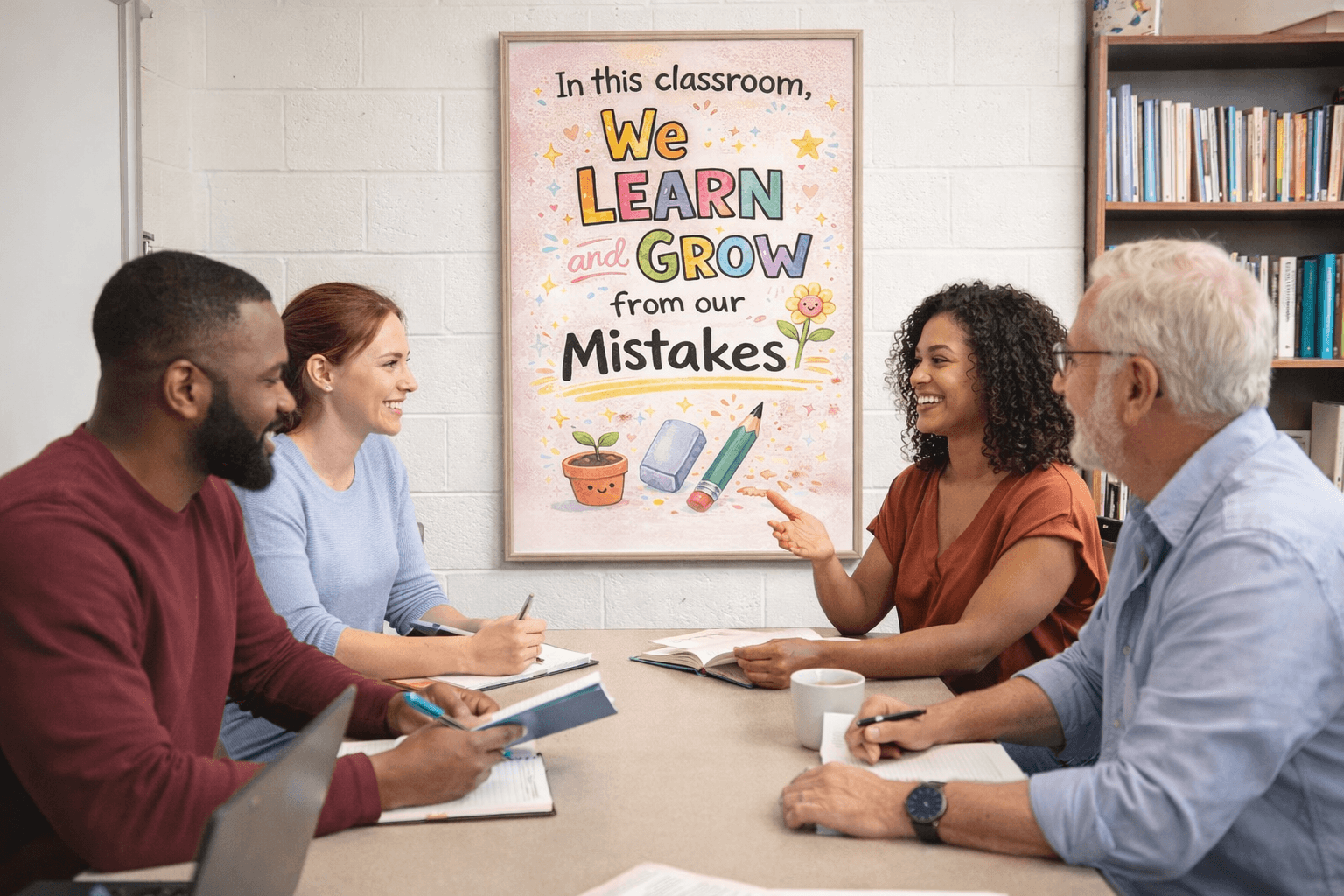
Growth Mindset Isn't Just for Students. It's How Schools Actually Change.
Why strong PD can stall at implementation, why teacher questions are useful data, and what growth mindset leadership requires during school change.

PLC Leadership
From Data to Decisions: A Practical Fix for Ineffective PLCs
Why PLC meetings stall at translation and follow-through, and how a redesigned Short Data Cycle moves a team from data to a clear decision in one session.

AI in Education
Your School Doesn't Need AI Training. It Needs a PLC Cycle.
Why AI PD days rarely change practice, why NotebookLM is a practical first tool, and how PLCs give AI exploration a structure.
PLC Leadership
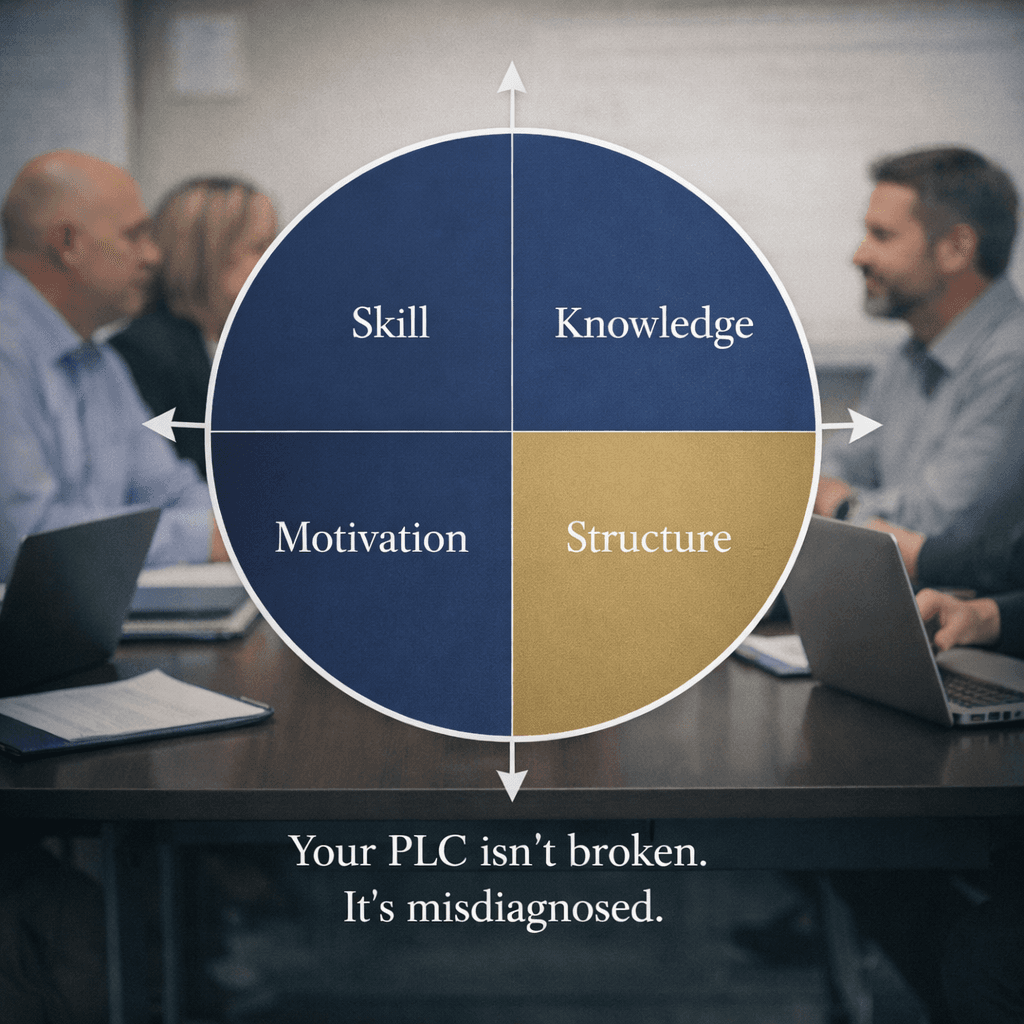
Is Your PLC Working? A Free Diagnostic for School Leaders
A free diagnostic. Sixteen questions show where PLC work is breaking down: Structure, Facilitation Skill, Shared Understanding, or Sustained Investment.

Reading Intervention
The Distance Between a Good Idea and a Useful Tool
How research on explicit instruction reshaped a reading tool for older students: the teacher delivers short explicit lessons and the app supports practice.

Reading Intervention
They Don’t Know It’s Phonics — and the Real Secondary Reading Gap Is Word-Level
Why many older students struggle with reading without knowing the cause is word-level, what a teacher survey signaled, and what effective practice needs.

Reading Intervention
What a Hard Class Taught Me About Being Stuck
A former instructional coach rereads a 2016 account of turning around a fifth grade class and treats a current creative block as a signal about structure.

AI in Education
Stop Treating AI Like Training. Start Treating It Like Change Management.
Why AI adoption in schools depends on change management: protected time, shared language, clear purpose, follow-through, and safety to learn in public.
AI in Education
AI Safety for Students: A 45-Minute Teacher PD You Can Run This Week
A 30 to 45 minute teacher PD on AI safety: shared language on privacy, app permissions, deepfakes, and verification, plus scenarios and follow-up.
AI in Education
Why I’m Doubling Down on PLCs and What’s Coming Next
Why PLCs give teachers the time, trust, and structure that AI rollouts need, what VOYAGE Horizons Module 1 covers, and the next course on NotebookLM.

PLC Leadership
Change Management Is Not a Buzzword. It’s What PLCs Are Built For.
Why a single training is not implementation, and how PLCs can serve as the change management structure that helps a new initiative take hold in schools.

PLC Leadership
What Real PLC Facilitator Development Looks Like: Building Confidence, Competence, and Capacity
A yearlong approach to PLC facilitator development: co-planning, observation, feedback, and reflection that build confidence, competence, and capacity.

PLC Leadership
Skill, Will, or System? A Better Question for School Improvement
When an initiative stalls after PD, ask whether it is a skill, will, or system issue. A case where the system, not teachers, needed a clearer design.

PLC Leadership
The Cost of Control (and the Courage of Curiosity)
What happens when a coach carries PLCs alone: meetings run smoothly but instruction stays the same. Why curiosity, not control, builds shared ownership.

PLC Leadership
How Leadership Grows Effective PLC Facilitators
How leadership teams can grow PLC facilitators through a phased year of support, using skill, knowledge, motivation, and resources to find the real need.

PLC Leadership
From Scripted to Supported: Coaching Change When the Curriculum and the Safety Net Disappears
A coach's account of a curriculum change that felt like loss, and how five minutes of protected listening helped a grade-level team move forward.

PLC Leadership
The People Who Hold It Together: Developing and Supporting Your PLC Facilitators
How to choose PLC facilitators with intention, what growth mindset really looks like, and how leaders can support facilitators without taking over.

PLC Leadership
The Leadership PLC: Why Your School Needs a PLC About PLCs
Why PLCs stall without a system behind them, and how a Leadership PLC uses skill, knowledge, resources, and motivation to diagnose breakdowns.

PLC Leadership
The Hidden Skillset of PLC Facilitation: Why Strong Teachers Need More Than Content Expertise
Why strong teaching does not automatically become strong facilitation, and the skills, structures, and leadership partnership PLC facilitators need.

PLC Leadership
The PLC Facilitator’s Dilemma: Leading Peers Without Losing Trust
Why leading peers is hard for PLC facilitators, what effective peer facilitation requires, and how leadership support helps teacher-leaders lead well.

PLC Leadership
Time Is Not the Problem: Redefining Priority in PLC Structures
Why time is rarely the root problem for PLCs, plus leadership moves that protect collaboration and one schedule change that added time without cost.

PLC Leadership
Why Don’t Our PLCs Work?
Learn to diagnose why PLCs stall by sorting challenges into skill, knowledge, motivation, or resource gaps, with AI prompts to support each step.

PLC Leadership
Turning ‘I Notice / I Wonder’ into Targeted PLC Goals
A five-step process for turning I Notice / I Wonder discussions into focused PLC goals, shown through a 6th grade math team, with AI prompts at each step.

PLC Leadership
The Most Powerful PD I Ever Attended Had Nothing to Do With Curriculum
A reflection on a PD session with no slides or mandates, where staff named their fears about change, and what it shows about the emotional side of change.

AI in Education
Planning for AI in Education: A PLC Roadmap for 2025–2026
A yearlong roadmap for the 2025 to 2026 school year that uses PLCs to explore AI at a measured pace through small pilots, reflection, and clear goals.

School Improvement
One Size Fits None: Why So Many Initiatives Fail
Why PD and initiatives often fail to reach classrooms, and how adult learning theory and Jobs to Be Done shift design from compliance to progress.

AI Literacy
Why I Joined an AI Startup Focused on Tier 3 Intervention
How AI tools helped build VOYAGE Horizons, what training language models at Google showed, and why the work now centers on Tier 3 AI implementation.

AI in Education
Planning Ahead for AI in Education: What’s Next?
Questions schools should ask before adopting AI, from vetting tools for bias to protecting student privacy, and why PLCs are a practical place to start.

PLC Leadership
Top 3 Reasons PLCs Struggle and How to Address Them
Three common reasons PLCs struggle: skill gaps, motivation challenges, and ineffective facilitation. Learn the signs of each and steps to address them.

AI in Education
Navigating AI in Education
How PLCs can guide AI integration in schools, from a needs analysis and clear goals to collaborative learning, ethical policy, and ongoing evaluation.
AI in Education
From Instructional Design to Marketing: How AI Tools Save Time and Money
How ChatGPT, Play.ht, and Synthesia support instructional design and small business work, from training videos and voiceovers to custom chatbots.

School Improvement
Balancing Theory and Practice in Science of Reading PD
How to balance research-based theory with hands-on practice in Science of Reading PD, using the gradual release model so teachers can apply strategies.

Professional Learning Communities
How Effective Facilitators Transform PLCs
How to select, train, and support PLC facilitators as teacher leaders who connect school-wide goals to classroom practice, with leader PLCs alongside.

School Improvement
Tackling Data Overload in PLCs
Why data overload stalls PLC meetings, how time, communication, and resistance add to it, and five strategies to refocus teams on actionable data.

Instructional Coach
Empowering Teachers Through Strengths-Based Classroom Walkthroughs
What strengths-based classroom walkthroughs are, why fault-focused visits fall short, and how leaders can give feedback that builds trust and growth.

Professional Learning Communities
Effective Professional Learning Communities: Lessons I Learned Creating VOYAGE Horizons
How the VOYAGE Horizons framework organizes PLCs into three connected teams: a Lead Team, a Facilitator Team, and Grade Level Teams, and what each does.

AI in Education
Responsible AI Use in Education
Core principles for responsible AI use in schools: data privacy, fairness, and human oversight, plus classroom uses, misuse risks, and policy review.

AI in Education
Supporting Teachers by Reducing Workload with AI Tools and Strategic Support
How school leaders can audit teacher workload, find inefficiencies, and pair AI tools with common planning time, support staff, templates, and better PD.

Professional Learning Communities
The Art of Embracing Change: How Teacher Resistance Impedes PLCs
Why some teachers resist PLCs, from past compliance-driven PLCs to time and vulnerability, and strategies leaders can use to build openness to change.
Professional Learning Communities
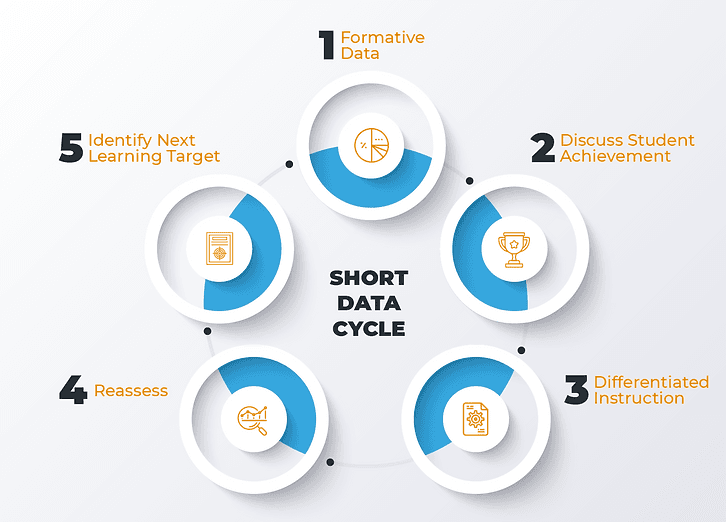
Decision Making with the Short Data Cycle
How the Short Data Cycle moves PLCs from data overload to action through collection, reflection, action planning, and implementation in short loops.

School Leader
Recalibrating PLCs for a Successful School year
How a needs analysis of teacher knowledge, skills, and motivation helps school leaders set PLC priorities and build an action plan for the school year.

Instructional Coach
Reflections on the Journey of an Instructional Coach
An instructional coach reflects on trust, teacher autonomy, and role clarity, and on how unclear roles and micromanagement erode coaching relationships.

Instructional Coach
Starting a New Role as an Instructional Coach: Your First 30 Days
A guide to a new instructional coach's first 30 days: 1:1 meetings, learning-focused observations, team meetings, admin expectations, and a 30/60/90 plan.